When it comes down to it, most of the people I know, if they could only recommend one restaurant on Oahu to people visiting Hawaii, would recommend Side Street Inn, 1225 Hopaka Street in Honolulu, across the street from the Ewa side of the Ala Moana Shopping Center.
Side Street's chef, Colin Nishida, creates the kind of food that sophisticated gourmands and down home eating people can all love. The restaurant was featured on the Hawaii episode of Anthony Boudain's No Reservation program, with Bourdain eating dinner with many of Hawaii's most celebrated chefs. It is said that the best chefs in town go to Side Street to eat after hours.
When saying that if I could only recommend one, it's not to say that Side Street is the best restaurant in town, nor is it necessarily my favorite (although it is certainly up there; we don't go as often because it is more of a bar restaurant and it is not the best place to take children, especially young children). But if I had to pick one place that best represents what food in Hawaii is about, Side Street is that place.
When you approach the restaurant, you might get the feeling you are in the wrong place. The restaurant is literally on a side street, and near a red light section. But there is valet parking and when you get inside, you are greeted by a crowded interior teeming with people and good food. Hopefully you will be seated fairly quickly, and then you will try to make choices from a huge menu. I would suggest going with at least three people, because you will want to order several dishes.
The pork chops are legendary. Lightly dredged and fried (according to a Honolulu Star-Bulletin article, the dredging ingredients are cornstarch, flour, pepper and garlic salt), they are comfort food at its most delicious.
Also highly revered by many is the fried rice. I'm not as wild about it as others, but it is good. It has a very distinct flavor, and I am guessing that they add dashi (Japanese fish based soup stock) to it in addition to lup cheong, Chinese sausage instead of the usual char siu. They also add frozen peas and carrots, which takes the dish down a peg for me. But if you are there for the first time, you have to try it and judge for yourself.
The lilikoi (passion fruit) baby back ribs are terrific. Sweet and succulent, they are everything you hoped that Hawaii style ribs should taste like but rarely do.
There are also nods to Hawaii Regional Cuisine: try the furikake (a Japanese seaweed based condiment) encrusted mahi-mahi, or the pesto encrusted ahi. The Manila steamer clams are garlicky and buttery and served with garlic bread to sop up the scrumptious liquid that is formed during the preparation. The famous Nalo Greens (to me, the absolute best mesclun salad greens) are utilized in various ways and a fabulous addition.
I could go on and on, but by now, you have decided to go and try it for yourself. It will be a great experience.
Grace and aloha,
Tom
P. S. When I get into discussions with non-believers, the most common complaint is they are scientifically based people, and faith in God and Christ cannot be empirically proven by the scientific method. The problem is that the scientific method is not designed to measure or verify human experience. For example, if I say that I love my wife and children, how can you prove that with the scientific method? You can measure certain physiological changes when I'm with them, you might be able to isolate and categorize brain wave activity, but you cannot qualify by this method what it means to love.
Another problem is that the scientific method is inherently limited, because it is a human enterprise restricted to the finite nature of human cognition. How can something finite have the ability to measure something that is infinite?
Still another problem with the scientific method is that it requires detachment from the thing being studied, so that a more "objective" conclusion can be reached. But detachment is exactly the opposite goal of religion (which is from the Latin word, ligare - to connect - which is the same root word as ligament, which connects muscle to bone; re-ligion is to re-connect humans with God). You cannot understand religion unless you are making an active pursuit of connection with God. This would be at cross purposes with the scientific method (I do embrace the scientific method wherever it is appropriate, by the way).
In any case, I've always felt the logical, scientific perspective presented by non-believers is really a smoke screen. When it comes down to it, all of the non-believers I've spoken to begin with a logical, scientific objection to religion, but eventually reveal a highly emotional experience that turned them away.
Bill Maher's film "Religulous" illustrates this, which is ironic because Maher spends the whole film trashing religion (I highly recommend this film...it actually strengthened my faith in a strange way; although I would suspect that if you were anti-religious going in, you would be even more so at the end). Maher shares that his family attended church with his Irish Catholic father, and didn't know for many years that his mother was actually Jewish, which would have been almost scandalous in the pre-Vatican II (and at times anti-Semitic) Catholic Church. Because of a disagreement with church dogma, his father stopped taking the family to church when Bill was 13. This had to be a volatile set of circumstances for a young adolescent that would affect profoundly his views on religion.
In the film, Maher meets with a men's group from a storefront church. After one of the more regimented members, offended by Maher, stalks off, the remaining members continue the conversation. At the end, these men ask Maher if they could pray for him. He allows them to do it, keeping his eyes open and staring at the man praying for him with intense scrutiny and curiosity. At the end, he says to the remaining men, "Thank you for being Christ-like, and not just Christian."
That was a pretty extraordinary statement from one who has been so vitriolic against Christianity. I think what it comes down to is that Maher opposes extremist religious people, which is what he mostly experiences. I think he is secretly much more open to God than he lets on. I'd love to see a conversation between Maher and someone like Rob Bell - who thinks moderately and scientifically - instead of the admittedly preposterous people Maher interviews in the film. In fact, I believe most Christians also find the extremist religious people to be pretty ridiculous as well, as they are more about personal power and control than an authentic desire to do God's will.
In the end, faith in God and Christ is much more about personal experience, and not about detached, scientific observation.
You can read my blog posts faithfully, but if you never go and actually experience the restaurants or food I write about, you will never truly know what I am talking about. It's the same with faith: you can read about it, argue about it, but if you don't truly seek an authentic experience with God in Christ, you'll never know what I'm talking about.
Monday, September 14, 2009

Friday, September 11, 2009
Ramen - Japanese Comfort Food
My last post was about saimin, and this one is about ramen. Some people may think they are one in the same, but they are distinctly different. Saimin is an evolution of the many cultural influences on a dish that in part, comes from the Japanese noodle soup ramen (the word and dish which, like many things from East Asia, has ITS origins in China). But the two dishes differ in the same way that pizza from CPK is different from pizza in Chicago.
Like many, my first experience with ramen was the red, square cellophane packages with the brand name Sapporo Ichiban. I hesitated to eat it for a long time because of what the package said it was: alimentary paste. I didn't know what that was, but it sounded awful. I would later learn that FDA regulations required this description because for something to be labeled "noodles," it would have to contain a specific list of ingredients. I guess the FDA has become more culturally enlightened, because now they are described as Japanese Style Noodles.
In any case, I learned to love these noodles cooked in a broth that was chock full of salt and MSG. Again, maybe it was because it was in the small canon of dishes my dad knew how to prepare with love. Even though my dad never lived in Hawaii, he did a local spin on ramen: he usually boiled a hot dog in the broth (it drove my mother crazy out of concerns for his health). Perhaps taking her cue, I never developed a taste for the hot dog in the broth, but ramen always reminds me of my childhood, and the simpler and loving days of home life back then.
Ramen (the word itself means a type of noodles, which is the "men" part; in different cultures, the word will be spelled "min," "mein," and "myun," all meaning noodles) is usually served in a broth made from dashi (fish stock) or meat stock. The most basic style is shio, which means just salt is added. Other flavorings for the broth include shoyu or miso, and/or ingredient additions, such as wakame (seaweed) or tanuki (tempura bits).
My wife Becky and I have long favored Ezogiku Noodle Cafe, which is a franchised ramen restaurant chain from Japan, specializing in miso ramen, using a secret recipe for the miso. It is a delicious and unpretentious bowl, with bean sprouts, a little bit of chopped pork, and kamaboko (fish cake). The restaurant has some great combination deals, which can add fried rice and gyoza, crescent shaped dumplings which in a Chinese restaurant you might call potstickers, and in a Korean restaurant you would call mandoo. Ezogiku is a great deal, especially the combinations; adding gyoza at most other ramen restaurants bumps up the price considerably.
One caveat: the franchise locations can vary in quality. I recently went to the location at University and Beretania after taking my daughters to their music classes on the University of Hawaii campus. Our server was definitely pleasant and efficient, but the cook had long hair that wasn't covered, and the restroom was cramped because of the supplies piled in there (no food, thankfully enough). A peek into the kitchen saw a couple of youth sitting in the back amongst the food and cooking utensils either playing video games or texting; they moved to a table in the restaurant when the lunch crowd died down. A counter employee returned from a break with a hotdog, which he proceeded to eat at the counter, in full view of customers (not exactly a ringing endorsement of the food). While our meal tasted fine, my daughters and I are still alive after the visit, and I didn't find any long hairs, the unprofessional atmosphere left me a bit uncomfortable, and I am unlikely to return anytime soon.
Ezogiku's Waimalu location (a couple of doors down from Shiro's Saimin Haven) is much better. The main part of the kitchen is in plain view, so you know what's happening to your food, and the staff is professional, yet local-style friendly.
Rai Rai Ramen in Kailua is actually quite good, but I don't go as much because of the rather charmless service: the staff isn't rude and the service is efficient, but it just seems like they don't seem to care whether you are there or not (kind of like another famous Kailua restaurant, but more on that in the future).
Nani-wa Ya Ramen in the food court of Ala Moana Shopping Center is okay, but the prices are rather high for a food court, and again, charmless service.
I recently tried Goma Tei, also in the Ala Moana Shopping Center, but in its own space on the makai (ocean) side where a Chinese restaurant used to be. The interior is contemporary and clean. The management shrewdly put in a 30 seat counter for quick, in and out service - very welcome in the mall where the biggest anxiety in the food court is whether or not you can find a place to sit. There are tables as well. When I was there, the restaurant had a nice number of diners to inspire hope that there was good food to be found, but there was no wait, which was a relief.
Goma Tei did not seem to have my favorite miso preparation, so I opted for tan tan ramen, which is flavored with sesame paste, and extra char siu (note: Japanese style char siu is not like the red, sweetish, chewy BBQ pork you will find in Chinese restaurants; Japanese style is very tender, natural colored and savory rolled pork). This is the first time I've had the sesame based broth and while it was okay, I found the sesame flavor to be a bit overwhelming (I apologize if this is an idiotic neophyte observation) and the broth itself a little too oily. But maybe that's because of the huge amount of char siu I was given - definitely a great deal. I also thought the service was efficient and attentive, a step up from other places I mentioned.
My L. A. friends responded to an SOS with some great suggestions for ramen around the City of Angels, but the one I want to highlight is the best ramen bowl I've ever had: Santouka Ramen, which is, believe it or not, in the food court of the Mitsuwa Marketplace, a Japanese market chain, with several locations in Southern California (I went to the Torrance location). This is authentic Japanese ramen: a subtle, but profoundly flavored broth, with perfectly made and cooked noodles which are like top quality pasta cooked al dente. This is ramen at its very best; it doesn't bang you over the head like Goma Tei, but like a Noh Theater play, once you begin reflecting on what you are eating, the realization will set in that you've been given an experience that is truly extraordinary. Santouka is so authentically Japanese that with one of the combinations, you can get natto (fermented soy beans that are either revered or reviled, depending on your opinion of the aroma)!]
Eating noodles has a measure of good luck involved as long noodles represent long life (which is why cutting noodles was and is discouraged). So live long and enjoy the pleasures of ramen!
Grace and aloha,
Tom
P. S. Some of you may go to Santouka and wonder what the fuss is about. You may shrug and say "what is the big deal?" Once again, it takes some time to reflect on the experience, and it often takes multiple experiences, truly to come to appreciate the amazing qualities of this preparation of ramen. I don't know how many times I've tasted something for the first time and either did not like it or shrugged my shoulders, but over time, developed a taste for it and have become so grateful that I was willing to be patient and discover something truly extraordinary in my life.
In a similar and much more profound way, faith and church are like that. If you experience church once, you might think, "What's the big deal?" and never go back, or become an ETC Christian (you make it to church on Easter, Thsnkgiving, and Christmas to please your parents or grandparents). When that happens, the span between visits is so long that each subsequent visit feels somewhat like the first time: a little awkward and unfamiliar, so it is distracting to the authentic experience.
So develop a taste for church and faith: visit for several weeks in a row...after awhile, you give yourself the best chance of experiencing Christ the way it is supposed to be experienced: in community with others, and sharing in something truly special. It's a taste I hope you will develop that will last a lifetime.
Like many, my first experience with ramen was the red, square cellophane packages with the brand name Sapporo Ichiban. I hesitated to eat it for a long time because of what the package said it was: alimentary paste. I didn't know what that was, but it sounded awful. I would later learn that FDA regulations required this description because for something to be labeled "noodles," it would have to contain a specific list of ingredients. I guess the FDA has become more culturally enlightened, because now they are described as Japanese Style Noodles.
In any case, I learned to love these noodles cooked in a broth that was chock full of salt and MSG. Again, maybe it was because it was in the small canon of dishes my dad knew how to prepare with love. Even though my dad never lived in Hawaii, he did a local spin on ramen: he usually boiled a hot dog in the broth (it drove my mother crazy out of concerns for his health). Perhaps taking her cue, I never developed a taste for the hot dog in the broth, but ramen always reminds me of my childhood, and the simpler and loving days of home life back then.
Ramen (the word itself means a type of noodles, which is the "men" part; in different cultures, the word will be spelled "min," "mein," and "myun," all meaning noodles) is usually served in a broth made from dashi (fish stock) or meat stock. The most basic style is shio, which means just salt is added. Other flavorings for the broth include shoyu or miso, and/or ingredient additions, such as wakame (seaweed) or tanuki (tempura bits).
My wife Becky and I have long favored Ezogiku Noodle Cafe, which is a franchised ramen restaurant chain from Japan, specializing in miso ramen, using a secret recipe for the miso. It is a delicious and unpretentious bowl, with bean sprouts, a little bit of chopped pork, and kamaboko (fish cake). The restaurant has some great combination deals, which can add fried rice and gyoza, crescent shaped dumplings which in a Chinese restaurant you might call potstickers, and in a Korean restaurant you would call mandoo. Ezogiku is a great deal, especially the combinations; adding gyoza at most other ramen restaurants bumps up the price considerably.
One caveat: the franchise locations can vary in quality. I recently went to the location at University and Beretania after taking my daughters to their music classes on the University of Hawaii campus. Our server was definitely pleasant and efficient, but the cook had long hair that wasn't covered, and the restroom was cramped because of the supplies piled in there (no food, thankfully enough). A peek into the kitchen saw a couple of youth sitting in the back amongst the food and cooking utensils either playing video games or texting; they moved to a table in the restaurant when the lunch crowd died down. A counter employee returned from a break with a hotdog, which he proceeded to eat at the counter, in full view of customers (not exactly a ringing endorsement of the food). While our meal tasted fine, my daughters and I are still alive after the visit, and I didn't find any long hairs, the unprofessional atmosphere left me a bit uncomfortable, and I am unlikely to return anytime soon.
Ezogiku's Waimalu location (a couple of doors down from Shiro's Saimin Haven) is much better. The main part of the kitchen is in plain view, so you know what's happening to your food, and the staff is professional, yet local-style friendly.
Rai Rai Ramen in Kailua is actually quite good, but I don't go as much because of the rather charmless service: the staff isn't rude and the service is efficient, but it just seems like they don't seem to care whether you are there or not (kind of like another famous Kailua restaurant, but more on that in the future).
Nani-wa Ya Ramen in the food court of Ala Moana Shopping Center is okay, but the prices are rather high for a food court, and again, charmless service.
I recently tried Goma Tei, also in the Ala Moana Shopping Center, but in its own space on the makai (ocean) side where a Chinese restaurant used to be. The interior is contemporary and clean. The management shrewdly put in a 30 seat counter for quick, in and out service - very welcome in the mall where the biggest anxiety in the food court is whether or not you can find a place to sit. There are tables as well. When I was there, the restaurant had a nice number of diners to inspire hope that there was good food to be found, but there was no wait, which was a relief.
Goma Tei did not seem to have my favorite miso preparation, so I opted for tan tan ramen, which is flavored with sesame paste, and extra char siu (note: Japanese style char siu is not like the red, sweetish, chewy BBQ pork you will find in Chinese restaurants; Japanese style is very tender, natural colored and savory rolled pork). This is the first time I've had the sesame based broth and while it was okay, I found the sesame flavor to be a bit overwhelming (I apologize if this is an idiotic neophyte observation) and the broth itself a little too oily. But maybe that's because of the huge amount of char siu I was given - definitely a great deal. I also thought the service was efficient and attentive, a step up from other places I mentioned.
My L. A. friends responded to an SOS with some great suggestions for ramen around the City of Angels, but the one I want to highlight is the best ramen bowl I've ever had: Santouka Ramen, which is, believe it or not, in the food court of the Mitsuwa Marketplace, a Japanese market chain, with several locations in Southern California (I went to the Torrance location). This is authentic Japanese ramen: a subtle, but profoundly flavored broth, with perfectly made and cooked noodles which are like top quality pasta cooked al dente. This is ramen at its very best; it doesn't bang you over the head like Goma Tei, but like a Noh Theater play, once you begin reflecting on what you are eating, the realization will set in that you've been given an experience that is truly extraordinary. Santouka is so authentically Japanese that with one of the combinations, you can get natto (fermented soy beans that are either revered or reviled, depending on your opinion of the aroma)!]
Eating noodles has a measure of good luck involved as long noodles represent long life (which is why cutting noodles was and is discouraged). So live long and enjoy the pleasures of ramen!
Grace and aloha,
Tom
P. S. Some of you may go to Santouka and wonder what the fuss is about. You may shrug and say "what is the big deal?" Once again, it takes some time to reflect on the experience, and it often takes multiple experiences, truly to come to appreciate the amazing qualities of this preparation of ramen. I don't know how many times I've tasted something for the first time and either did not like it or shrugged my shoulders, but over time, developed a taste for it and have become so grateful that I was willing to be patient and discover something truly extraordinary in my life.
In a similar and much more profound way, faith and church are like that. If you experience church once, you might think, "What's the big deal?" and never go back, or become an ETC Christian (you make it to church on Easter, Thsnkgiving, and Christmas to please your parents or grandparents). When that happens, the span between visits is so long that each subsequent visit feels somewhat like the first time: a little awkward and unfamiliar, so it is distracting to the authentic experience.
So develop a taste for church and faith: visit for several weeks in a row...after awhile, you give yourself the best chance of experiencing Christ the way it is supposed to be experienced: in community with others, and sharing in something truly special. It's a taste I hope you will develop that will last a lifetime.
Sunday, September 6, 2009
Shiro's in Waimalu - Still the King of Saimin
Saimin is one of the definitive dishes of Hawaii, perhaps THE definitive dish. Although the name is Chinese - the word means "thin noodles" - it has its roots in plantation life when Hawaii was the primary producer of sugar and pineapple for the world and attracted laborers from all over the world. The noodle itself is very similar to Japanese ramen, although to me, saimin has a slightly different texture, maybe just a bit more glutenous than ramen. When the different ethnic groups came home from a long day, different things went into a soup pot, like Korean won bok, Chinese char siu and wonton, Japanese dashi, maybe green onion from a Filipino garden, eggs from a Hawaiian hen house, Portuguese sausage (although this is rarely an ingredient in saimin now). As the dish evolved, Spam became a standard ingredient. Saimin is ubiquitous - even McDonald's has added it to their menu in Hawaii.
While Zippy's saimin is probably eaten the most - and it is very good - my favorite is still Shiro's Saimin Haven in Waimalu, just past the Pearlridge Mall on the way to Pearl Highlands. Owner Shiro Matsuo is now 90 years old, and is still in good health - not doubt because of the health benefits of saimin. Known as “Mistah Saimin,” the former tenured professor turned restaurateur serves up a perfect bowl of saimin.
When I first began eating at Shiro's 25 years ago, the restaurant was a definite hole in the wall, with that old fashioned 60's look. Shiro is a poet/philosopher, and many of his sayings graced the wall in plain paper, usually with the salutation "Dear Hearts...." Here is his description of the restaurant:
"The place with a song in its heart and dedicated to the proposition that the hard working people must be taken care of with invigorating, nourishing, soulsifying food that is not too skimpy, plenty tasty and geared to the pocketbook."
Several years ago, the restaurant received a complete makeover, and now has a bright, attractive interior. Shiro's musings are still on the walls, only now framed and with Local Hawaiian pictures and prints in the background.
Shiro's has a huge menu: there are 60 varieties of saimin (Shiro likes to say that while Baskin-Robbins only has 31 flavors, he has nearly twice as many). There are also standard Local Hawaii style coffee shop items, but in a quarter century of dining there, I have never had anything but saimin.
The saimin choices differ in the kind of garnishes you order. The standard is a bit of char siu, won bok, carrot, and green onion. You can get roast duck added to the saimin (broadcaster Joe Moore's favorite, No. 59), you can get a hot dog, tripe stew, laulau, pork adobo, or even scallops. No. 60 is always reserved for a local celebrity's preference. These days, it's Linda Lingle saimin: one beef teri stick to accompany a standard wun tun min.
On this visit with my family, Becky got wun tun min and the girls got got one order of keiki saimin for both of them, which was plenty. All enjoyed theirs.
For the benefit of my blog readers, I got No. 58, the Dodonpa, the specialty of the house: 10 different garnishes (in addition to the basic ones) including one deep fried shrimp served on the side, Chinese Roast Pork, imitation crab, egg pancake sliced into a cake, roast beef, luncheon meat, mushroom, wun tun (the local way to spell wonton if it goes into saimin), mushrooms, and of course, Spam. It is served in a huge Chinese style soup bowl, like when you serve several guests at a banquet. I haven't had one in years, but it is still terrific: the broth is subtle but just right, and all of the ingredients really do work. If that wasn't enough, I also had a side of kimchi, made the local Hawaii style: a lot of ginger and not too much garlic.
One of the best things I love about Shiro's is that you can order the noodles three different ways: rare, medium, well done. As someone definitely from the al dente school of preparing pasta, I appreciate the option of having my noodles with a shorter cook time, so that they remain firm and chewy throughout my meal. There is not much worse than soggy noodles (Koreans even have a specific word for it, which sounds something like puh-duh-suh). Becky also ordered her noodles rare, and really enjoyed them as well.
Shiro's is definitely a local hangout. What you will come to notice is that many locals will eat saimin in a distinctive way. I remember my friend Val (the Punahou foodie) being on the mainland, and someone asked her how long had it been since she moved from Hawaii. She asked, "How did you know I was from Hawaii?" The reply was, "The way you eat noodles."
The local way to eat saimin (also adopted by some non-local longtime residents like me): dip the Chinese soup spoon into a dish of shoyu and Chinese mustard and get just a bit; get some broth from your bowl, being careful not to let the shoyu mustard run off into the bowl; top it off with noodles and/or garnish or wuntun; then take the entire spoonful into your mouth. It's a delicate balancing act at times, but it's a delicious way to do it...a burst of flavor, which is more satisfying than slurping some noodles first, then taking a spoonful of broth; or pouring shoyu mustard into the entire broth.
Live long and well, Shiro...you are a living treasure.
Grace and aloha,
Tom
P. S. Yesterday we had Holy Communion in church, which is one of the two sacraments (visible signs of God’s grace, or unconditional love, favor, acceptance; the other is baptism) in the United Methodist Church and most Protestant denominations. The Roman Catholic Church has 7 sacraments, which include penance (confession), marriage, and last rites. The Protestant churches have reduced the sacraments to the two “necessary” ones.
Holy Communion has its beginnings in the last supper which Jesus had with his disciples before his arrest, flogging, crucifixion and resurrection; the meal itself was a Passover Meal, one the most important holidays in Judaism, which remembers God delivering the Hebrews from Egyptian slavery. At this meal, Jesus said for his disciples always to remember him whenever they ate or drank.
That Jesus chose the most basic of human activities as the way for them to remember him is amazing and utter genius, which probably does not do Jesus justice as a description. Let me share a few excerpts from my sermon from yesterday:
“Why do I blog about food? Because I believe that food is deeply spiritual. Just on the surface when is it that most people pray? When it is time to eat. The most frequent time that most people pray, is at mealtime. Even non-religious people are usually okay about mealtime prayers.
“Food is a gift of grace from God. We even call that prayer at meal times grace: the unconditional love of God.
“In Luke 24:35 is says that ‘he had been made known to [a few of the disciples] in the breaking of the bread.’
“It was in food that they saw glimpses of Jesus…of God’s unconditional love…of the understanding of wonder, joy, and deep satisfaction.
“The next time you eat, I want you to be aware of the gift that food brings…of how it gives us glimpses of God….”
May it be so for you always.
While Zippy's saimin is probably eaten the most - and it is very good - my favorite is still Shiro's Saimin Haven in Waimalu, just past the Pearlridge Mall on the way to Pearl Highlands. Owner Shiro Matsuo is now 90 years old, and is still in good health - not doubt because of the health benefits of saimin. Known as “Mistah Saimin,” the former tenured professor turned restaurateur serves up a perfect bowl of saimin.
When I first began eating at Shiro's 25 years ago, the restaurant was a definite hole in the wall, with that old fashioned 60's look. Shiro is a poet/philosopher, and many of his sayings graced the wall in plain paper, usually with the salutation "Dear Hearts...." Here is his description of the restaurant:
"The place with a song in its heart and dedicated to the proposition that the hard working people must be taken care of with invigorating, nourishing, soulsifying food that is not too skimpy, plenty tasty and geared to the pocketbook."
Several years ago, the restaurant received a complete makeover, and now has a bright, attractive interior. Shiro's musings are still on the walls, only now framed and with Local Hawaiian pictures and prints in the background.
Shiro's has a huge menu: there are 60 varieties of saimin (Shiro likes to say that while Baskin-Robbins only has 31 flavors, he has nearly twice as many). There are also standard Local Hawaii style coffee shop items, but in a quarter century of dining there, I have never had anything but saimin.
The saimin choices differ in the kind of garnishes you order. The standard is a bit of char siu, won bok, carrot, and green onion. You can get roast duck added to the saimin (broadcaster Joe Moore's favorite, No. 59), you can get a hot dog, tripe stew, laulau, pork adobo, or even scallops. No. 60 is always reserved for a local celebrity's preference. These days, it's Linda Lingle saimin: one beef teri stick to accompany a standard wun tun min.
On this visit with my family, Becky got wun tun min and the girls got got one order of keiki saimin for both of them, which was plenty. All enjoyed theirs.
For the benefit of my blog readers, I got No. 58, the Dodonpa, the specialty of the house: 10 different garnishes (in addition to the basic ones) including one deep fried shrimp served on the side, Chinese Roast Pork, imitation crab, egg pancake sliced into a cake, roast beef, luncheon meat, mushroom, wun tun (the local way to spell wonton if it goes into saimin), mushrooms, and of course, Spam. It is served in a huge Chinese style soup bowl, like when you serve several guests at a banquet. I haven't had one in years, but it is still terrific: the broth is subtle but just right, and all of the ingredients really do work. If that wasn't enough, I also had a side of kimchi, made the local Hawaii style: a lot of ginger and not too much garlic.
One of the best things I love about Shiro's is that you can order the noodles three different ways: rare, medium, well done. As someone definitely from the al dente school of preparing pasta, I appreciate the option of having my noodles with a shorter cook time, so that they remain firm and chewy throughout my meal. There is not much worse than soggy noodles (Koreans even have a specific word for it, which sounds something like puh-duh-suh). Becky also ordered her noodles rare, and really enjoyed them as well.
Shiro's is definitely a local hangout. What you will come to notice is that many locals will eat saimin in a distinctive way. I remember my friend Val (the Punahou foodie) being on the mainland, and someone asked her how long had it been since she moved from Hawaii. She asked, "How did you know I was from Hawaii?" The reply was, "The way you eat noodles."
The local way to eat saimin (also adopted by some non-local longtime residents like me): dip the Chinese soup spoon into a dish of shoyu and Chinese mustard and get just a bit; get some broth from your bowl, being careful not to let the shoyu mustard run off into the bowl; top it off with noodles and/or garnish or wuntun; then take the entire spoonful into your mouth. It's a delicate balancing act at times, but it's a delicious way to do it...a burst of flavor, which is more satisfying than slurping some noodles first, then taking a spoonful of broth; or pouring shoyu mustard into the entire broth.
Live long and well, Shiro...you are a living treasure.
Grace and aloha,
Tom
P. S. Yesterday we had Holy Communion in church, which is one of the two sacraments (visible signs of God’s grace, or unconditional love, favor, acceptance; the other is baptism) in the United Methodist Church and most Protestant denominations. The Roman Catholic Church has 7 sacraments, which include penance (confession), marriage, and last rites. The Protestant churches have reduced the sacraments to the two “necessary” ones.
Holy Communion has its beginnings in the last supper which Jesus had with his disciples before his arrest, flogging, crucifixion and resurrection; the meal itself was a Passover Meal, one the most important holidays in Judaism, which remembers God delivering the Hebrews from Egyptian slavery. At this meal, Jesus said for his disciples always to remember him whenever they ate or drank.
That Jesus chose the most basic of human activities as the way for them to remember him is amazing and utter genius, which probably does not do Jesus justice as a description. Let me share a few excerpts from my sermon from yesterday:
“Why do I blog about food? Because I believe that food is deeply spiritual. Just on the surface when is it that most people pray? When it is time to eat. The most frequent time that most people pray, is at mealtime. Even non-religious people are usually okay about mealtime prayers.
“Food is a gift of grace from God. We even call that prayer at meal times grace: the unconditional love of God.
“In Luke 24:35 is says that ‘he had been made known to [a few of the disciples] in the breaking of the bread.’
“It was in food that they saw glimpses of Jesus…of God’s unconditional love…of the understanding of wonder, joy, and deep satisfaction.
“The next time you eat, I want you to be aware of the gift that food brings…of how it gives us glimpses of God….”
May it be so for you always.
Friday, September 4, 2009
Burgers on the Edge - Gourmet Fast Food on Kapahulu
Roy Yamaguchi is a celebrity chef, known by some as Iron Chef Asian on the short lived TV cooking conpetition Iron Chef USA (which featured William Shatner as the Chairman), and best known for his empire of eponymous Roy's restaurants. Yamaguchi started out in top L. A. restaurants such as L'Ermitage and Michael's, then came to fame during the '80s as the head chef of 385 North, a trendy restaurant on La Cienega Blvd. in Los Angeles, near the Beverly Center.
I've eaten at Roy's a number of times over the years, mostly at the Hawaii Kai location, but also in Scottsdale, AZ. I feel that the food at Roy's has been good to very good, but not great. To be fair, I have never been to Roy's when he was in the kitchen...I understand he is an amazing chef.
Yamaguchi has entered the fast food business with Burgers on the Edge, which is in a shopping mall on Kapahulu Ave. (the one with the fancy looking Safeway). The theme is gourmet hamburgers and sides. Perhaps the most attention getting item is the Wagyu (similar to Kobe) beef that is an option for your burger (ground chuck is the other beef option; there is chicken, turkey or portobella mushrooms for those who eschew red meat).
I had lunch with my longtime friend from Pomona College, Val, a Punahou grad, who really gets much of the credit for introducing me to many of the great food places in Hawaii. When the soba place we were first going to go to was closed, she suggested Burgers on the Edge. I was very excited, since I had heard about this place for a long time.
I ordered Roy's "My Own Burger," his custom burger consisting of Nalo Greens (the best mesclun salad mix of all time), Maui onions, Tillamook cheddar cheese, A-1 Steak Sauce, and a fried egg (perhaps he's been to Fatburger?). I opted for the 1/3 pound Wagyu beef for the protein (you can also get a 1/2 pound patty as well) and the regular bun (whole wheat is the other option, which Val got on her standard Wagyu burger).
Okay...what you must know about me is that I am one of those guys originally from Southern California who thinks that In-N-Out Burger is the best ever (I'll tell you why in a future post). You either agree, or roll your eyes and cry, "What is the big deal?" I also grew up loving Tommy's hamburgers and Fatburger as well, so you will know my bias.
So what did I think of my burger? Well, for the good stuff: I thought the bun was great - soft, with good flavor, and not too big. My complaint about burger places like Teddy's and Kua Aina is that the buns are too big, and they overwhelm the meat. Roy's bun is thoughtfully paired with the meat. I also loved the greens, which were much better than the greens Teddy's, for example, puts on theirs. The Maui onions are the best to put in a burger because they are milder than regular onions and don't overpower the rest of the sandwich.
The Wagyu beef itself was terrific, but unfortunately, it was cooked to medium-well, so the benefit of having such great meat was diminished. I think I want to go back and try the 1/2 pound burger and see if there is a difference. The fried egg didn't seem to add anything, and though I liked the A-1, most people I know are not neutral about it, so it depends on your palate.
Val liked her burger, too, but thought that the whole wheat bun wasn't as good as the regular one.
Something worth noting are the sweet potato fries, which are excellent. Very lightly coated, they are very crispy on the outside (hard to do with sweet potatoes), and tender and full of sweet potato flavor on the inside. They have regular potato fries as well, and while they were fine, I would put them below McDonald's (which is still good, as I think McDonald's has great fries).
So what's the final verdict? I would say that Burgers on the Edge was like my other experiences at Roy's restaurants: good to very good, but not great. As it happens, the day before going to Burgers on the Edge, I ate one of McDonald's new 1/3 pound Angus burgers, which I thought was pretty good. I would definitely take Burgers on the Edge over McDonald's, but if you gave me a choice, I would take a Double-Double from In-N-Out 9 times out of 10. But I would take Burgers on the Edge over Teddy's and Kua Aina by a small margin.
For more information, directions, and the menu: http://www.burgersontheedge.com
Grace and aloha,
Tom
P. S. My friend, Jane Shohara, told me she has ordered the Rob Bell video, "Everything Is Spiritual," that I mentioned in an earlier post. I hope others will follow suit, especially those who are skeptics of religion. He uses quantum physics and other scientific perspectives along with a brilliant explanation of the Creation Story in Genesis. You might not come to faith watching it (although there is a good chance), but at least you'll come away having to admit that the plausibility of God is high.
You might also check out Bell's Nooma videos, which I mentioned earlier as 12-14 minute video talks which are visually interesting and features Rob's riveting narrative. Nooma is a clever phonetic spelling of the Greek word "Pneuma," which means wind, breath, and spirit, from which we get the term Holy Spirit. You might recognize this word in such English terms as "pneumonia," an illness of the lungs, where breath comes. If you were starting out with Nooma videos, I would recommend: "Lump," which is a powerful way of explaining God's grace; "You," which helps explain why the early Christians chose Jesus in the midst of a bunch of other gods and even another prominent figure first called "The Prince of Peace"; and "Dust" which is great for those who feel that they don't quite measure up to feel comfortable talking about God or serving God. Start with those, but don't miss the others, because nearly all of them are great.
I've eaten at Roy's a number of times over the years, mostly at the Hawaii Kai location, but also in Scottsdale, AZ. I feel that the food at Roy's has been good to very good, but not great. To be fair, I have never been to Roy's when he was in the kitchen...I understand he is an amazing chef.
Yamaguchi has entered the fast food business with Burgers on the Edge, which is in a shopping mall on Kapahulu Ave. (the one with the fancy looking Safeway). The theme is gourmet hamburgers and sides. Perhaps the most attention getting item is the Wagyu (similar to Kobe) beef that is an option for your burger (ground chuck is the other beef option; there is chicken, turkey or portobella mushrooms for those who eschew red meat).
I had lunch with my longtime friend from Pomona College, Val, a Punahou grad, who really gets much of the credit for introducing me to many of the great food places in Hawaii. When the soba place we were first going to go to was closed, she suggested Burgers on the Edge. I was very excited, since I had heard about this place for a long time.
I ordered Roy's "My Own Burger," his custom burger consisting of Nalo Greens (the best mesclun salad mix of all time), Maui onions, Tillamook cheddar cheese, A-1 Steak Sauce, and a fried egg (perhaps he's been to Fatburger?). I opted for the 1/3 pound Wagyu beef for the protein (you can also get a 1/2 pound patty as well) and the regular bun (whole wheat is the other option, which Val got on her standard Wagyu burger).
Okay...what you must know about me is that I am one of those guys originally from Southern California who thinks that In-N-Out Burger is the best ever (I'll tell you why in a future post). You either agree, or roll your eyes and cry, "What is the big deal?" I also grew up loving Tommy's hamburgers and Fatburger as well, so you will know my bias.
So what did I think of my burger? Well, for the good stuff: I thought the bun was great - soft, with good flavor, and not too big. My complaint about burger places like Teddy's and Kua Aina is that the buns are too big, and they overwhelm the meat. Roy's bun is thoughtfully paired with the meat. I also loved the greens, which were much better than the greens Teddy's, for example, puts on theirs. The Maui onions are the best to put in a burger because they are milder than regular onions and don't overpower the rest of the sandwich.
The Wagyu beef itself was terrific, but unfortunately, it was cooked to medium-well, so the benefit of having such great meat was diminished. I think I want to go back and try the 1/2 pound burger and see if there is a difference. The fried egg didn't seem to add anything, and though I liked the A-1, most people I know are not neutral about it, so it depends on your palate.
Val liked her burger, too, but thought that the whole wheat bun wasn't as good as the regular one.
Something worth noting are the sweet potato fries, which are excellent. Very lightly coated, they are very crispy on the outside (hard to do with sweet potatoes), and tender and full of sweet potato flavor on the inside. They have regular potato fries as well, and while they were fine, I would put them below McDonald's (which is still good, as I think McDonald's has great fries).
So what's the final verdict? I would say that Burgers on the Edge was like my other experiences at Roy's restaurants: good to very good, but not great. As it happens, the day before going to Burgers on the Edge, I ate one of McDonald's new 1/3 pound Angus burgers, which I thought was pretty good. I would definitely take Burgers on the Edge over McDonald's, but if you gave me a choice, I would take a Double-Double from In-N-Out 9 times out of 10. But I would take Burgers on the Edge over Teddy's and Kua Aina by a small margin.
For more information, directions, and the menu: http://www.burgersontheedge.com
Grace and aloha,
Tom
P. S. My friend, Jane Shohara, told me she has ordered the Rob Bell video, "Everything Is Spiritual," that I mentioned in an earlier post. I hope others will follow suit, especially those who are skeptics of religion. He uses quantum physics and other scientific perspectives along with a brilliant explanation of the Creation Story in Genesis. You might not come to faith watching it (although there is a good chance), but at least you'll come away having to admit that the plausibility of God is high.
You might also check out Bell's Nooma videos, which I mentioned earlier as 12-14 minute video talks which are visually interesting and features Rob's riveting narrative. Nooma is a clever phonetic spelling of the Greek word "Pneuma," which means wind, breath, and spirit, from which we get the term Holy Spirit. You might recognize this word in such English terms as "pneumonia," an illness of the lungs, where breath comes. If you were starting out with Nooma videos, I would recommend: "Lump," which is a powerful way of explaining God's grace; "You," which helps explain why the early Christians chose Jesus in the midst of a bunch of other gods and even another prominent figure first called "The Prince of Peace"; and "Dust" which is great for those who feel that they don't quite measure up to feel comfortable talking about God or serving God. Start with those, but don't miss the others, because nearly all of them are great.
Wednesday, September 2, 2009
When Costco has the best at any price
You have to love Costco...I find excuses to go. I think that most of us think of Costco as a place to get things cheaply. But I have found that some of the Costco products, mostly under their Kirkland brand, are not only "about as good," but the best I have had. Just a sampling...maybe others can chime in on your favorites as well:
1. Chocolate Macadamia Clusters. Hawaiian Host makes something called Caramacs, which are caramel and macadamia nuts covered with chocolate. They are just fine, but Costco's Kirkland brand Chocolate Macadamia Clusters are waaaaaay better. I think that they use more macadamia nuts, but the real key is that they nuts are salted, which give them a scrumptious sweet/salty taste that most people just love (one of these days I'll write about the wonders of "Sweet, Salty, and Nutty" at Trader Joe's). Good news: the Chocolate Macadamia Clusters aren't just in Hawaii; the first time I tasted them was at Uncle Albert's house (the one from Loco Moco fame; see an earlier post) in Southern California. He got them at the Costco in Monterey Park, I believe.
2. Super Jumbo Virginia Peanuts. Planters may be okay for some, but there is nothing like super jumbo sized peanuts like you can get from The Peanut Shop of Williamsburg. And as Pastor Mike and Cris will no doubt echo, there is nothing quite like peanuts from Virginia. Here's the catch: to get them to Hawaii, you have to order them online at a cost of $16 plus at least $6 shipping for a 40 ounce can (merchants often tack on an extra fee for shipping to Hawaii). Costco has a 40 ounce can, again under the Kirkland brand, for about $10, and I would swear they were at least as good, if not better: Perfectly seasoned, large size, great peanut taste, satisfying crunch.
3. USDA Prime Steaks. Most of the time, I am just fine using my Jaccard on cheaper cuts of steak (see my earlier post on the meat tenderizing Jaccard). but after I came back home from graduation, I decided to try the prime New York steaks from Costco. They were the best steaks I have ever had at home (and I like to think that I can make a pretty good steak). The meat was tender, juicy, and flavorful unlike any other.
4. Okay, we're supposed to be talking about Costco, and some of my friends will be upset that I am talking about Sam's Club, but there are a few items from the Wal-Mart spinoff that are also the best: The Bakers and Chefs brand of spaghetti is to me as good as DeCecco (the gold standard of consumer based dried pasta) spaghetti, at a fraction of the cost. BTW, don't get the Costco spaghetti under the Garafolo brand - it is the worst spaghetti I have ever tasted...by far...especially the odd, rough texture.
5. The Burnett brand of heat and serve meat products at Sam's Club has been a lifesaver in our family. Take your pick: beef pot roast with gravy, turkey breast with gravy, or tri-tip au jus. Six to seven minutes in the microwave, a pot of rice, and a can of Green Giant Niblets corn (I do put it in a dish) and that's how Daddy makes dinner on many a night! It really is hard to beat.
Costco also has a line of pre-cooked meat, but I don't find them to be as good as Sam's Club. The pot roast kind of gets mushed when you slice it, and you end up having a lot of long fibers of meat.
Grace and aloha,
Tom
P. S. Some may wonder why a pastor should be blogging about food. Shouldn't I be talking about "spiritual" matters in the main part of the post? Perhaps...but I have come to realize that in the Bible and in faith, the idea of food is central to the understanding of God. The writer Luke records that the early church spent time in prayer, in teaching, in fellowship, and interestingly, in the breaking of bread - in other words, eating food. It is my firm belief that the act of eating is a sacred act that we have often lost in the rat race world we live in, choosing instead "fast food" so we can get back to what we're supposed to be doing. The act of eating is a gift from God, and the enjoyment of it is a major part of the grace that God gives to us. Some may eat to live, but I live to eat, because it satisfies a part of the hunger that resides in me, that is symbolic of the hunger for the joy and blessing that comes from God. Eating wonderful food is but a small but significant reminder of that. May we all come to find that joy and blessing in every moment, including in the simple gift of food.
1. Chocolate Macadamia Clusters. Hawaiian Host makes something called Caramacs, which are caramel and macadamia nuts covered with chocolate. They are just fine, but Costco's Kirkland brand Chocolate Macadamia Clusters are waaaaaay better. I think that they use more macadamia nuts, but the real key is that they nuts are salted, which give them a scrumptious sweet/salty taste that most people just love (one of these days I'll write about the wonders of "Sweet, Salty, and Nutty" at Trader Joe's). Good news: the Chocolate Macadamia Clusters aren't just in Hawaii; the first time I tasted them was at Uncle Albert's house (the one from Loco Moco fame; see an earlier post) in Southern California. He got them at the Costco in Monterey Park, I believe.
2. Super Jumbo Virginia Peanuts. Planters may be okay for some, but there is nothing like super jumbo sized peanuts like you can get from The Peanut Shop of Williamsburg. And as Pastor Mike and Cris will no doubt echo, there is nothing quite like peanuts from Virginia. Here's the catch: to get them to Hawaii, you have to order them online at a cost of $16 plus at least $6 shipping for a 40 ounce can (merchants often tack on an extra fee for shipping to Hawaii). Costco has a 40 ounce can, again under the Kirkland brand, for about $10, and I would swear they were at least as good, if not better: Perfectly seasoned, large size, great peanut taste, satisfying crunch.
3. USDA Prime Steaks. Most of the time, I am just fine using my Jaccard on cheaper cuts of steak (see my earlier post on the meat tenderizing Jaccard). but after I came back home from graduation, I decided to try the prime New York steaks from Costco. They were the best steaks I have ever had at home (and I like to think that I can make a pretty good steak). The meat was tender, juicy, and flavorful unlike any other.
4. Okay, we're supposed to be talking about Costco, and some of my friends will be upset that I am talking about Sam's Club, but there are a few items from the Wal-Mart spinoff that are also the best: The Bakers and Chefs brand of spaghetti is to me as good as DeCecco (the gold standard of consumer based dried pasta) spaghetti, at a fraction of the cost. BTW, don't get the Costco spaghetti under the Garafolo brand - it is the worst spaghetti I have ever tasted...by far...especially the odd, rough texture.
5. The Burnett brand of heat and serve meat products at Sam's Club has been a lifesaver in our family. Take your pick: beef pot roast with gravy, turkey breast with gravy, or tri-tip au jus. Six to seven minutes in the microwave, a pot of rice, and a can of Green Giant Niblets corn (I do put it in a dish) and that's how Daddy makes dinner on many a night! It really is hard to beat.
Costco also has a line of pre-cooked meat, but I don't find them to be as good as Sam's Club. The pot roast kind of gets mushed when you slice it, and you end up having a lot of long fibers of meat.
Grace and aloha,
Tom
P. S. Some may wonder why a pastor should be blogging about food. Shouldn't I be talking about "spiritual" matters in the main part of the post? Perhaps...but I have come to realize that in the Bible and in faith, the idea of food is central to the understanding of God. The writer Luke records that the early church spent time in prayer, in teaching, in fellowship, and interestingly, in the breaking of bread - in other words, eating food. It is my firm belief that the act of eating is a sacred act that we have often lost in the rat race world we live in, choosing instead "fast food" so we can get back to what we're supposed to be doing. The act of eating is a gift from God, and the enjoyment of it is a major part of the grace that God gives to us. Some may eat to live, but I live to eat, because it satisfies a part of the hunger that resides in me, that is symbolic of the hunger for the joy and blessing that comes from God. Eating wonderful food is but a small but significant reminder of that. May we all come to find that joy and blessing in every moment, including in the simple gift of food.
Tuesday, September 1, 2009
Angelo Pietro - Japanese style Pasta plus Great Salad Dressing
Japanese style pasta has been popular in Japan for many years. In America, my favorite place has always been the Spoonhouse in Gardena, California on Redondo Beach Blvd. at Denker (I'll have to blog about that place one day). I went to Angelo Pietro in Honolulu (next to Shokudo - see my earlier post) recently and was pleasantly surprised that the food was innovative and tasty.
The appetizers were good. The deep fried calamari rings were crispy on the outside and tender on the inside. The garlic aioli was fabulous and I ended up putting it on bread the rest of the meal.
The appetizers were good. The deep fried calamari rings were crispy on the outside and tender on the inside. The garlic aioli was fabulous and I ended up putting it on bread the rest of the meal.
The surprise of the night was the questionably named Raw Potato Salad. I had visions of inedible chunks of raw potato mixed with mayonnaise. It was totally different. It was raw potato grated into long strings, like the way daikon radish is prepared for sashimi. It is garnished with daikon sprouts. You then season the salad with your choice of Angelo Pietro's four famous salad dressings. Let me tell you, it is nothing like you might imagine. It is terrific.
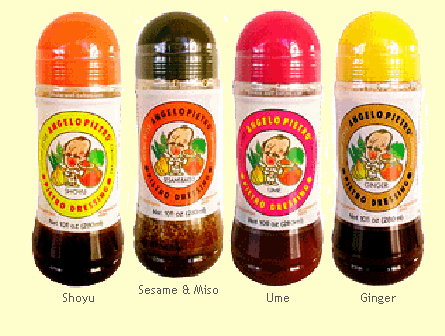
Angelo Pietro's salad dressings have been wildly popular in Hawaii and are sold in most supermarkets and at Long's. With a $6-$7 price tag for a relatively small bottle, they are not cheap. I always wait until they go on sale at Long's or Don Quijote, and the current sale price is 2 for $8.
My overwhelming favorite is the Sesame and Miso dressing (brown cap). I put it on everything from broccoli (a reasonable facsimile to my mother's broccoli namool), to pasta (my daughter loves this), and broiled chicken. It apparently is everyone else's favorite, too: whenever I find out about a sale on the dressings, brown cap is always gone first (or will be by the time I'm there!).
I tried the Shoyu dressing (orange cap) on the Raw Potato Salad. It was good, a bit more subtle in flavor than the brown cap dressing. I'm not a fan of the Ginger dressing (yellow cap) or the Ume (Japanese pickled plum) dressing (red cap), but others I know like them.
Back to the restaurant: the main dishes are mostly pasta dishes served in different combinations. You have a choice of four sauces: tomato, shoyu, garlic oil, and cream. One of those is combined with your choice of a long list of ingredients. On a specialty page of the menu are other choices, such as the Pietro clam that I ordered, which is similar to spaghetti alle vongole (spaghetti with clams). To me, it's not quite as good as the Spoonhouse, but I still liked it very much.
Others with me for that meal had the pasta with tarako and ika (codfish roe and squid), pasta with chicken and broccoli in the garlic oil, and something called shrimp and mushroom doria (Japanese style rice gratin, that was kind of like a thicker risotto). They were all good.
I think there are enough choices to keep a vegetarian very happy...a little harder for a vegan, but possible.
I'm not a big dessert person, but the creme brulee was good, and the different scoops of ice cream were also fine. I'll have to try the bread pudding next time.
Note to parents: the kids meals are excellent with generous portions. Half of a large pizza with sides or a good sized portion of spaghetti bolognese (meat sauce) at a very reasonable price. In fact, the prices all around are very reasonable.
When I'm coming out of the parking structure, I will always tend to turn right and go to Shokudo, but if it's crowded and the wait is too long (as it was that evening), Angelo Pietro is a delicious alternative.
Grace and aloha,
Tom
P. S. On the theme of blending two cultures, I am remembering Bob Lott, who was a retired pastor who served in Hawaii for many years. Bob went on to the church triumphant this summer, but the memories will remain. I will never forget the story he told about the time he was at a United Methodist gathering and the subject was sharing particularly meaningful experiences. Bob got up and shared how he was part of a regiment that was going to be invading Japan at the end of World War II. The word came that the atomic bomb blasts at Hiroshima and Nagasaki forced the surrender of Japan, making invasion unnecessary. He recalled how happy they were that they didn't have to be a part of the invasion and they were going home.
Then Haru (Harry) Fujimoto, the Japanese language pastor for Harris United Methodist Church at that time, got up to speak. He was a teenager who lived in Hiroshima. His class just happened to be on a field trip the day of the bomb blast. When it was felt that it was safe to return to the city, Harry rushed frantically to his home to find his family. The house was nothing but rubble. He then went to the hospital where his sister worked, hoping to find her there. Again, nothing but rubble remained. Going through the ruins, he found a pair of knitting needles. His sister was always knitting when she had a free moment. He know that she was gone along with the rest of the family.
Two stories about the same event...drastically different emotions.
After the event was over, Bob went up to Harry and expressed his sorrow for his loss, and also for his now conflicted feelings about celebrating while his friend suffered.
Harry put his hands on Bob's shoulders and said, "Bob, we are new creations in Christ."
May the redeeming power of Christ bring peace to you...may you find a reason to move beyond incalculable loss...and may you and I experience the kind of power and strength that God gives us to become new creations in Christ always....
My overwhelming favorite is the Sesame and Miso dressing (brown cap). I put it on everything from broccoli (a reasonable facsimile to my mother's broccoli namool), to pasta (my daughter loves this), and broiled chicken. It apparently is everyone else's favorite, too: whenever I find out about a sale on the dressings, brown cap is always gone first (or will be by the time I'm there!).
I tried the Shoyu dressing (orange cap) on the Raw Potato Salad. It was good, a bit more subtle in flavor than the brown cap dressing. I'm not a fan of the Ginger dressing (yellow cap) or the Ume (Japanese pickled plum) dressing (red cap), but others I know like them.
Back to the restaurant: the main dishes are mostly pasta dishes served in different combinations. You have a choice of four sauces: tomato, shoyu, garlic oil, and cream. One of those is combined with your choice of a long list of ingredients. On a specialty page of the menu are other choices, such as the Pietro clam that I ordered, which is similar to spaghetti alle vongole (spaghetti with clams). To me, it's not quite as good as the Spoonhouse, but I still liked it very much.
Others with me for that meal had the pasta with tarako and ika (codfish roe and squid), pasta with chicken and broccoli in the garlic oil, and something called shrimp and mushroom doria (Japanese style rice gratin, that was kind of like a thicker risotto). They were all good.
I think there are enough choices to keep a vegetarian very happy...a little harder for a vegan, but possible.
I'm not a big dessert person, but the creme brulee was good, and the different scoops of ice cream were also fine. I'll have to try the bread pudding next time.
Note to parents: the kids meals are excellent with generous portions. Half of a large pizza with sides or a good sized portion of spaghetti bolognese (meat sauce) at a very reasonable price. In fact, the prices all around are very reasonable.
When I'm coming out of the parking structure, I will always tend to turn right and go to Shokudo, but if it's crowded and the wait is too long (as it was that evening), Angelo Pietro is a delicious alternative.
Grace and aloha,
Tom
P. S. On the theme of blending two cultures, I am remembering Bob Lott, who was a retired pastor who served in Hawaii for many years. Bob went on to the church triumphant this summer, but the memories will remain. I will never forget the story he told about the time he was at a United Methodist gathering and the subject was sharing particularly meaningful experiences. Bob got up and shared how he was part of a regiment that was going to be invading Japan at the end of World War II. The word came that the atomic bomb blasts at Hiroshima and Nagasaki forced the surrender of Japan, making invasion unnecessary. He recalled how happy they were that they didn't have to be a part of the invasion and they were going home.
Then Haru (Harry) Fujimoto, the Japanese language pastor for Harris United Methodist Church at that time, got up to speak. He was a teenager who lived in Hiroshima. His class just happened to be on a field trip the day of the bomb blast. When it was felt that it was safe to return to the city, Harry rushed frantically to his home to find his family. The house was nothing but rubble. He then went to the hospital where his sister worked, hoping to find her there. Again, nothing but rubble remained. Going through the ruins, he found a pair of knitting needles. His sister was always knitting when she had a free moment. He know that she was gone along with the rest of the family.
Two stories about the same event...drastically different emotions.
After the event was over, Bob went up to Harry and expressed his sorrow for his loss, and also for his now conflicted feelings about celebrating while his friend suffered.
Harry put his hands on Bob's shoulders and said, "Bob, we are new creations in Christ."
May the redeeming power of Christ bring peace to you...may you find a reason to move beyond incalculable loss...and may you and I experience the kind of power and strength that God gives us to become new creations in Christ always....
Friday, August 28, 2009
Noboru in Kailua - Perhaps the Best All Around Japanese on Oahu
Authentic is a word that is used a lot but makes me nervous sometimes. For example, when someone says that a restaurant serves authentic cuisine, I tend to be skeptical. But in my opinion, Noboru Restaurant in Kailua (201 Hamakua Drive, across the street from Safeway and next to Zia's) qualifies as authentic Japanese cuisine. Chef/owner Akito Yoshioka is originally from Japan and is a highly skilled chef. Everything he does is with a mind to quality (and not necessarily quantity...this isn't a plate lunch place where you get tons of food). From noodle bowls to Teishoku dinners, Yoshioka prepares superb meals.
One of my favorites is the mini-don combination, where you get a small donburi (a savory ingredient served over rice, such as tempura) and a small bowl of udon (thick noodles in broth). It's a nice way to sample several flavors.
The tempura is outstanding, and while I have never tried the beef teriyaki or the steak, I have heard people rave about both. The sashimi is very fresh and expertly presented.
My favorite dish is the broiled saba (mackerel). It is probably the best in Hawaii by far. It is not the dish to order if your palette is on the American side, but if you love Japanese food, this is as good as any you might get in Japan.
For dessert, the green tea cheesecake sounds a little strange, but is absolutely delicious.
A considerable bonus is that co-owner Julie Yoshioka recently became one of only three or four certified sake specialists in Hawaii. You have to go to Japan and receive special training in order to be certified, so if you drink sake, you will receive expert advice and education. From time to time, Julie has sake tastings for education and enjoyment.
I have gone many times, and have always been satisfied. I think you will be as well.
Grace and aloha,
Tom
P. S. When I visited Japan with a group of United Methodist pastors and laypeople several years ago, I noticed that the Christian churches often did not have a cross, or it was not prominently displayed. In one church, instead of a cross, there was a giant crown of thorns. I learned that in Japan, the cross often has a negative connotation, one of Western imperialism. The crown of thorns was more in keeping with the Japanese sensibilities of the sacrificial, suffering servant model which Christ exemplifies.
Indeed, the cross as a symbol of the church did not come into popularity until the 4th century A.D., when the Roman Emperor Constantine dreamed that he was led in victory by a cross. Constantine became a Christian and legalized Christianity in the empire.
Up until then, the cross was such a horrific symbol of execution, that the early Christians also avoided using the cross as a symbol of faith (imagine wearing a neck-chain with a mini electric chair and you get the idea). In the catacombs, the symbol of the loaves and fishes was a common symbol of the gathered Christian community.
The Christianity I see portrayed on TV is so often the imperialistic, triumphal version. Maybe that's why so many people are turned off to church. Perhaps more emphasis on the suffering servant Christ and the community that comes from the loaves and fishes is needed to show the more "authentic" side of Christianity.
One of my favorites is the mini-don combination, where you get a small donburi (a savory ingredient served over rice, such as tempura) and a small bowl of udon (thick noodles in broth). It's a nice way to sample several flavors.
The tempura is outstanding, and while I have never tried the beef teriyaki or the steak, I have heard people rave about both. The sashimi is very fresh and expertly presented.
My favorite dish is the broiled saba (mackerel). It is probably the best in Hawaii by far. It is not the dish to order if your palette is on the American side, but if you love Japanese food, this is as good as any you might get in Japan.
For dessert, the green tea cheesecake sounds a little strange, but is absolutely delicious.
A considerable bonus is that co-owner Julie Yoshioka recently became one of only three or four certified sake specialists in Hawaii. You have to go to Japan and receive special training in order to be certified, so if you drink sake, you will receive expert advice and education. From time to time, Julie has sake tastings for education and enjoyment.
I have gone many times, and have always been satisfied. I think you will be as well.
Grace and aloha,
Tom
P. S. When I visited Japan with a group of United Methodist pastors and laypeople several years ago, I noticed that the Christian churches often did not have a cross, or it was not prominently displayed. In one church, instead of a cross, there was a giant crown of thorns. I learned that in Japan, the cross often has a negative connotation, one of Western imperialism. The crown of thorns was more in keeping with the Japanese sensibilities of the sacrificial, suffering servant model which Christ exemplifies.
Indeed, the cross as a symbol of the church did not come into popularity until the 4th century A.D., when the Roman Emperor Constantine dreamed that he was led in victory by a cross. Constantine became a Christian and legalized Christianity in the empire.
Up until then, the cross was such a horrific symbol of execution, that the early Christians also avoided using the cross as a symbol of faith (imagine wearing a neck-chain with a mini electric chair and you get the idea). In the catacombs, the symbol of the loaves and fishes was a common symbol of the gathered Christian community.
The Christianity I see portrayed on TV is so often the imperialistic, triumphal version. Maybe that's why so many people are turned off to church. Perhaps more emphasis on the suffering servant Christ and the community that comes from the loaves and fishes is needed to show the more "authentic" side of Christianity.
Subscribe to:
Posts (Atom)